Gastroparesis Medications – Test Prep and Practice Pearls

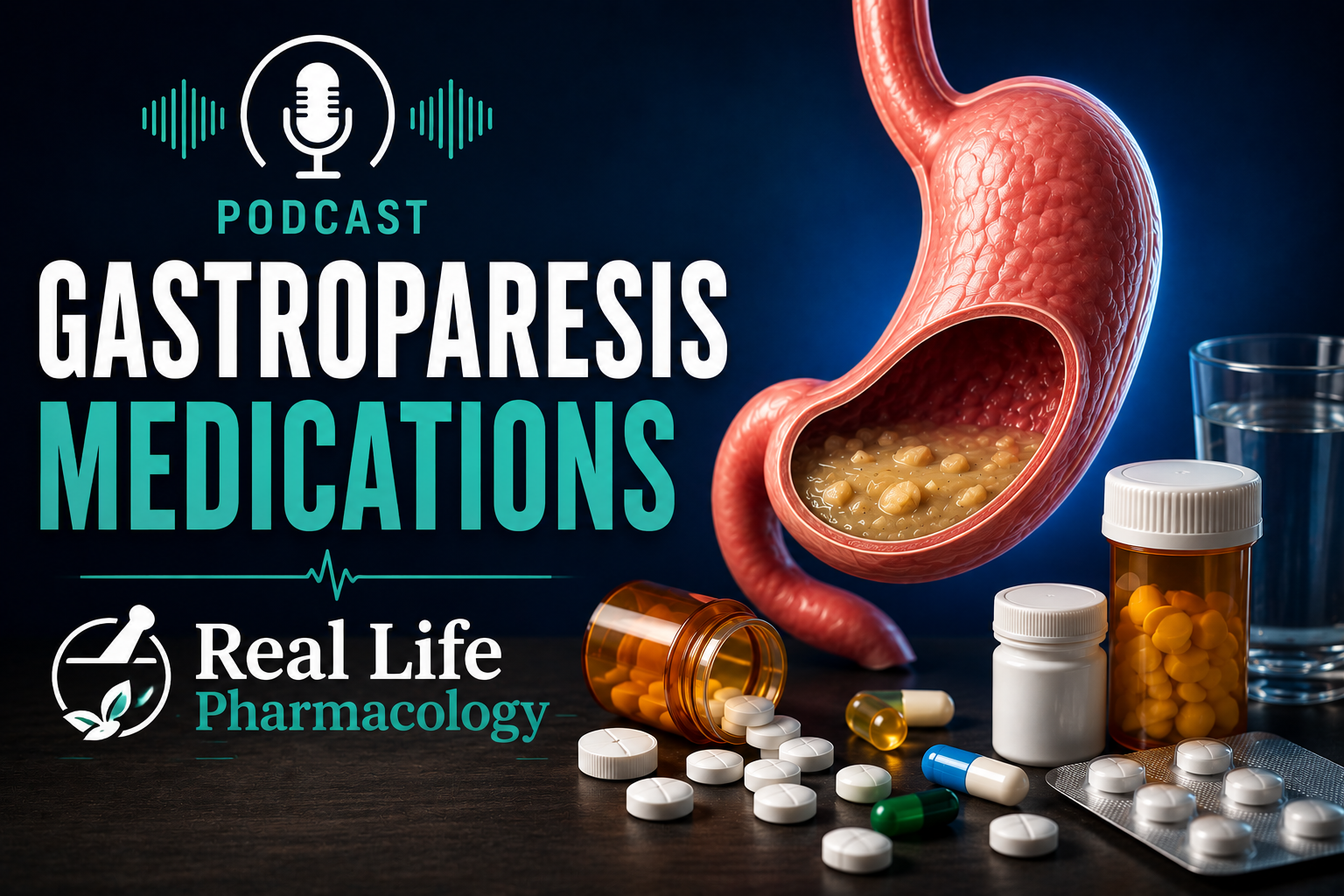
Gastroparesis can be a frustrating condition for both patients and clinicians, with symptoms such as nausea, vomiting, early satiety, bloating, and poor glycemic control significantly affecting quality of life. Medication management often requires balancing effectiveness with safety, especially since many commonly prescribed drugs can either improve or worsen gastric emptying. In this episode of the Real Life Pharmacology podcast, we’ll review the medications used to treat gastroparesis, discuss their mechanisms of action, highlight important adverse effects, and identify medications that may contribute to or exacerbate delayed gastric emptying.

Huge thank you to our sponsor – Mechanism of Action Podcast; Go check them out on all your favorite podcast platforms!

Be sure to check out our free Top 200 study guide – a 31 page PDF that is yours for FREE!

Top 200 Drugs Podcast – Medications 76-80

Reglan (metoclopramide) is used for gastroparesis and inhibits gastric smooth muscle by blocking dopamine receptors.

Relafen (nabumetone) is a non-selective inhibition of COX-1/COX-2 which leads to a reduction of inflammation via reduced prostaglandins.

Keflex (cephalexin) is a 1st generation oral cephalosporin that covers common gram positive organisms like Staph and Strep species.

Effexor (Venlafaxine) is an SNRI and inhibits both serotonin and norepinephrine reuptake. Primary uses include anxiety and depression.

Boniva (ibandronate) inhibits osteoclasts which helps treat osteoporosis. Osteoclasts break down bone to help pull calcium into the bloodstream.

Be sure to check out our free Top 200 study guide – a 31 page PDF that is yours for FREE!
Support The Podcast and Check Out These Amazing Resources!

NAPLEX Study Materials

BCPS Study Materials

BCACP Study Materials

BCGP Study Materials

BCMTMS Study Materials

Meded101 Guide to Nursing Pharmacology (Amazon Highly Rated)

Guide to Drug Food Interactions (Amazon Best Seller)

Pharmacy Technician Study Guide by Meded101

Beers Criteria Podcast Part 2 or 2

On this podcast episode, I finish up my breakdown of the Beers Criteria.

I cover the use of sliding-scale insulin and sulfonylureas in geriatric patients. Hypoglycemia is a major concern with both of these diabetes management strategies.

PPIs show up on the Beers criteria list as they can increase the risk of C. diff, pneumonia, fractures, and GI malignancies.

Metoclopramide has dopamine antagonist activity and can increase the risk of EPS and tardive dyskinesia.

Be sure to check out our free Top 200 study guide – a 31 page PDF that is yours for FREE!

Support The Podcast and Check Out These Amazing Resources!

NAPLEX Study Materials

BCPS Study Materials

BCACP Study Materials

BCGP Study Materials

BCMTMS Study Materials

Meded101 Guide to Nursing Pharmacology (Amazon Highly Rated)

Guide to Drug Food Interactions (Amazon Best Seller)

Pharmacy Technician Study Guide by Meded101