
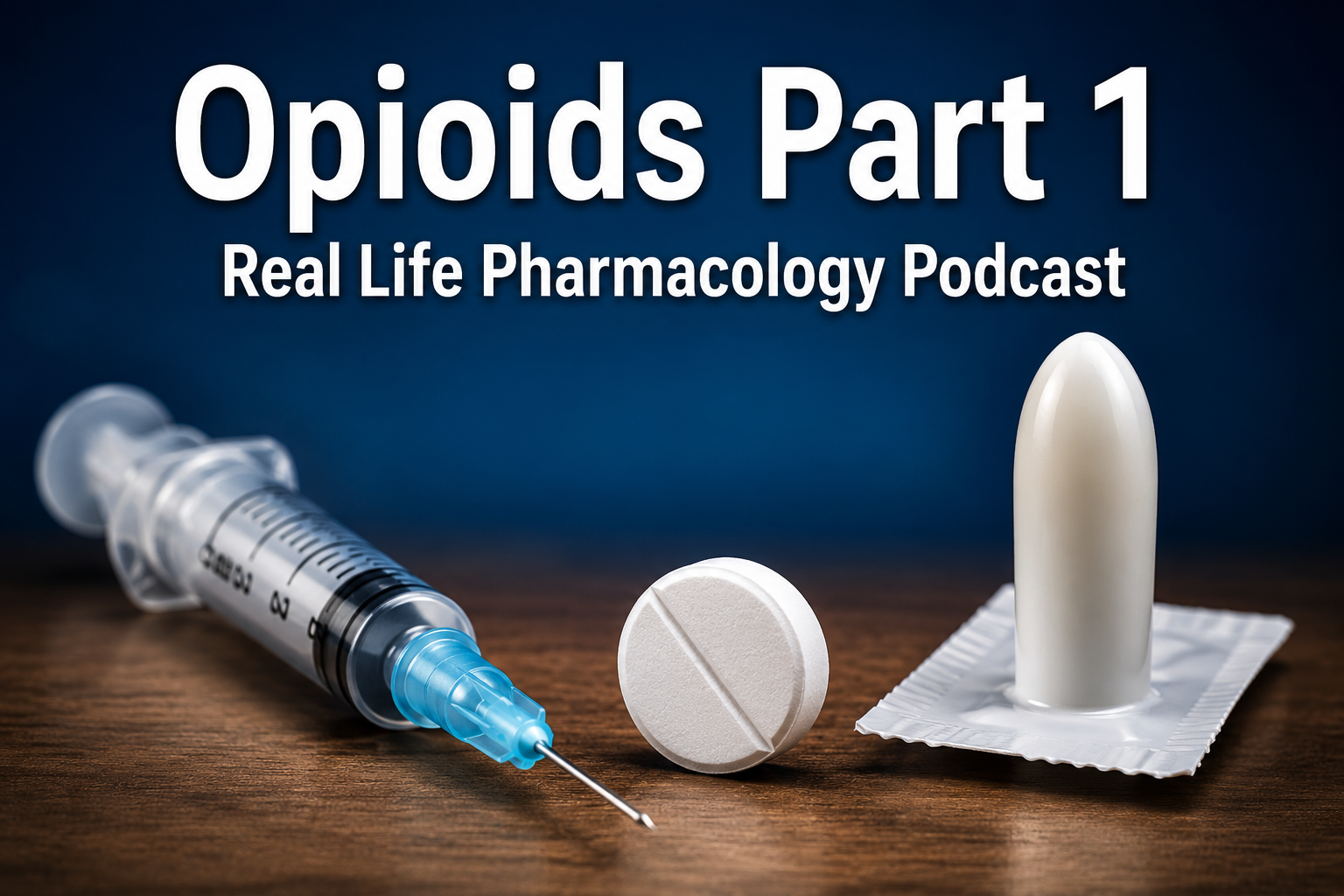
Opioids Part 1 – Test Prep and Practice Pearls

On part 1 of opioids, I’ll discuss morphine, morphine equivalents, conversion, and hydrocodone. The pharmacokinetic differences will be important between opioids, as well as the dosage forms. I hope you enjoy this podcast episode and share it with your friends!

Be sure to check out our free Top 200 study guide – a 31 page PDF that is yours for FREE!

Support The Podcast and Check Out These Amazing Resources!

NAPLEX Study Materials

BCPS Study Materials

BCACP Study Materials

BCGP Study Materials

BCMTMS Study Materials

Meded101 Guide to Nursing Pharmacology (Amazon Highly Rated)

Guide to Drug Food Interactions (Amazon Best Seller)
Pharmacy Technician Study Guide by Meded101

Morphine Pharmacology

Morphine has opioid agonist activity that can cause respiratory depression and death in overdose.

Morphine-6-glucuronide is the metabolite that can accumulate and cause CNS toxicity in renal failure.

Be aware of CNS depressants that may enhance the effect of morphine and other opioids. Some examples of CNS depressants include gabapentin, benzodiazepines, older antihistamine, skeletal muscle relaxants, and pregabalin.

Opioid withdrawal is a significant concern when patients have their morphine or another opioid abruptly stopped. Some signs of withdrawal include agitation, mood swings, anxiety, sweating, GI upset, pain, and insomnia.

Be sure to check out our free Top 200 study guide – a 31 page PDF that is yours for FREE!